Advertisement
2. Preserving the Past: Challenges in Conservation and Restoration
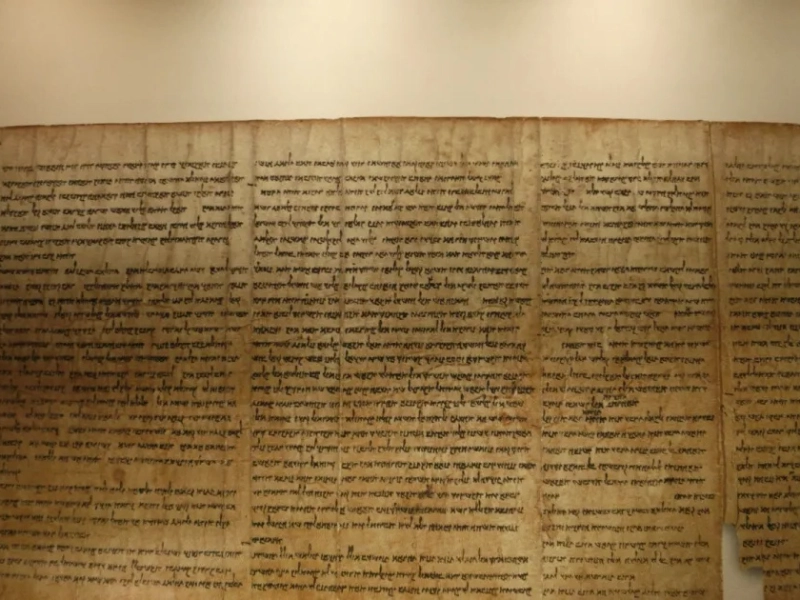
Preserving the Dead Sea Scrolls created before unheard-of difficulties for archaeologists and conservators. Having endured two millennia in the dry desert air, these ancient books were now subjected to contemporary environmental conditions endangering their very life. Many of the fragile and fragmentary scrolls needed creative conservation methods and modern technologies to guarantee their survival for next generations.
The great sensitivity of the scrolls to fluctuations in humidity and temperature presented one of the main difficulties conservers encountered. The leather or papyrus could expand, shrink, or quickly degrade from even tiny variations. Specifically engineered climate-controlled vaults were built to hold the scrolls in order to handle this problem. These modern buildings keep a consistent temperature and humidity level, simulating the conditions of the Qumran Caves where the scrolls had been kept for ages.
The actual handling of the scrolls presented even another major difficulty. Many pieces were so delicate that the smallest touch may cause permanent damage. Using non-invasive imaging technologies among other fresh approaches for handling and examining the scrolls, conservators By means of advanced photography techniques including multispectral imaging, researchers were able to investigate the manuscripts without physically touching them, therefore exposing features undetectable to the unaided view.
Unrolling and flattening the scrolls was especially challenging work. Some scrolls were discovered tightly coiled and quite brittle, almost impossible to unfold without harm. Developed to progressively loosen the scrolls, innovative humidification methods enable their meticulous unrolling and flattening for use in research and preservation.
Digital preservation evolved became a necessary component of scroll preservation as technologies developed. High-resolution digital pictures of the scrolls were produced so that academics all around could study the contents without running danger of damage to the originals. Apart from facilitating study, this digital repository guarantees that the contents of the scrolls will remain intact even if the actual objects finally degrade.
The materials chosen to keep and exhibit the scrolls themselves were part of the conservation efforts going beyond their actual condition. To stop more breakdown, archival-quality storage containers and acid-free materials were used. To balance the necessity for preservation with the wish to share these amazing objects with the world, exhibition venues were built with specialised lighting and climate control to protect the scrolls when on public display.